


The short answer
If your child plays one sport year-round, the most useful thing you can do is not argue about it. Build a plan that fits the schedule they already have. That plan has four parts:
- Two short strength sessions a week, kept going all year.
- One full day completely off every week.
- Sleep and food first in the heavy weeks, with training volume pulled back.
- A hard look at the extras: camps, clinics and showcases that cost more than they give back.
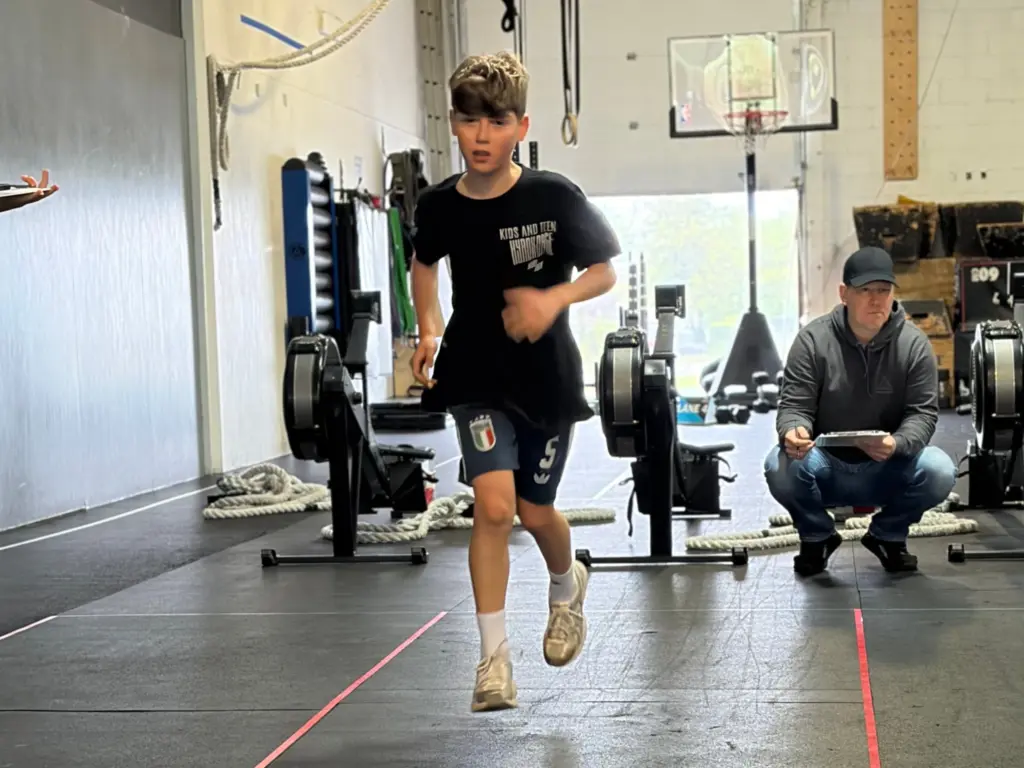
“Just play multiple sports” is advice most families can’t use
You’ve heard it a hundred times: kids should play more than one sport. In theory, that’s reasonable. Early specialization has real downsides, and nobody serious disputes that.
But look at what’s actually happening in Markham, Vaughan and across the GTA. Club seasons run into each other. Practices are several nights a week. Tournaments fill the long weekends and holidays. Private lessons fill whatever is left. Coaches offer it, parents sign up for it, and a lot of kids are in it because the sport asks for a huge number of skill reps to stay competitive.
Telling a family already inside that system to “just do something different” rarely works. They hear a lecture about a choice they’ve already made.
So here is a more useful question: given the schedule your child already has, what gives them the best chance of staying healthy and getting better?
1. Keep strength training going all year
Strength training is not something to squeeze in during the off-season, because many year-round athletes don’t have one.
The good news is that it doesn’t take much. For a busy young athlete, a well-run session can be short. Two sessions a week of about 30 to 45 minutes or a 1 time a week 60minute session, built around the basics, is a strong foundation:
- A squat or hinge pattern for the legs and hips
- A push and a pull for the upper body
- Single-leg work for balance and control
- Landing and jumping practice, taught properly
- Trunk strength that carries over to the sport
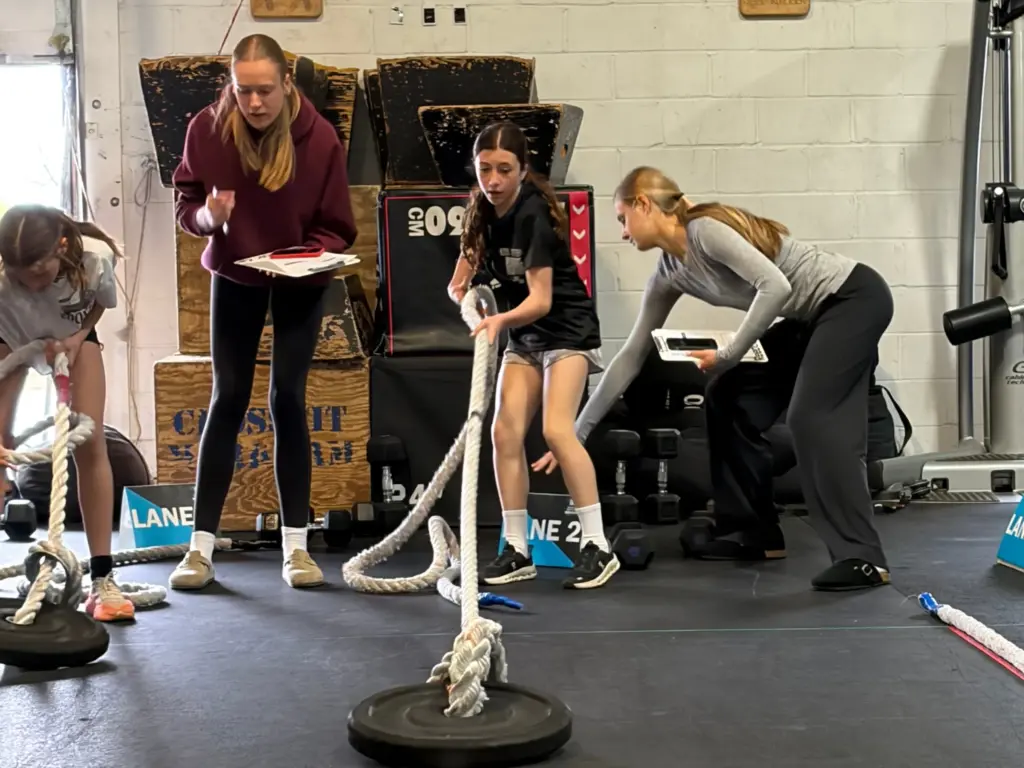
The point isn’t to add another hard workout. It’s to build a body that can handle the volume of practices and games already on the calendar, and to keep the athlete strong when it matters most, late in the season.
How to dose it around the sport: Schedule strength away from the hardest practice or game days. Keep the effort challenging but controlled. Nobody should be dragging themselves out of a session more tired than they walked in.
At Cristini Athletics, our youth programs are built around fundamentals, technique and consistency over intensity. If your child is already training in a heavy sport schedule, we program around it.
2. One full day off, every week
This is the minimum. Most kids probably need more, but a realistic plan has to be one that families will follow.
The rule is simple: one day a week with no practice, no lesson, no conditioning and no extra “skills session.”
Here’s the common trap. Parents see a free day and fill it. A private lesson. A little extra running. A set of plyometrics at home. Those sessions are often done tired and sloppy, and they add stress without adding much benefit.
A day off is not wasted time. It’s when a growing body absorbs the work it has already done.
3. In tournament weeks, move sleep and food to the top
Some weeks, the day off won’t happen. A three-day tournament takes it. That’s fine as an occasional exception. It becomes a problem when it’s every week.
In those weeks:
- Sleep moves up the list. Protect bedtime as best you can, including travel nights.
- Food moves up the list. Regular meals, enough protein and carbohydrates, and plenty of water. Don’t leave it to snack-bar food.
- Strength training backs off. Drop the volume, keep the movement quality, or skip a session. One lighter week costs an athlete very little over a full season, as long as the other weeks are consistent.
This is where good coaching shows up. A coach who adjusts the plan based on the week is more valuable than one who follows a template.
4. Be honest about the extras
Between the school season and the club season there are usually short windows. Those windows are valuable. They’re a chance to recover, to rebuild strength, and to heal any small aches before they become bigger ones.
Before filling them, ask:
- Will this camp or clinic actually improve my child’s skills?
- Is the “exposure” real, or is it mostly a registration fee?
- What does my child lose by doing it (rest, strength work, time to recover)?
Some events are worth it. Plenty are not. It’s okay to say no.
What to watch for
Whatever the sport, certain signs mean it’s time to pull back and get someone qualified to look at things:
- Pain that lingers or keeps coming back, especially in the knees, heels, hips or lower back
- Pain that changes how your child moves
- Constant fatigue, poor sleep or a drop in mood or motivation
- Performance that is getting worse, not better
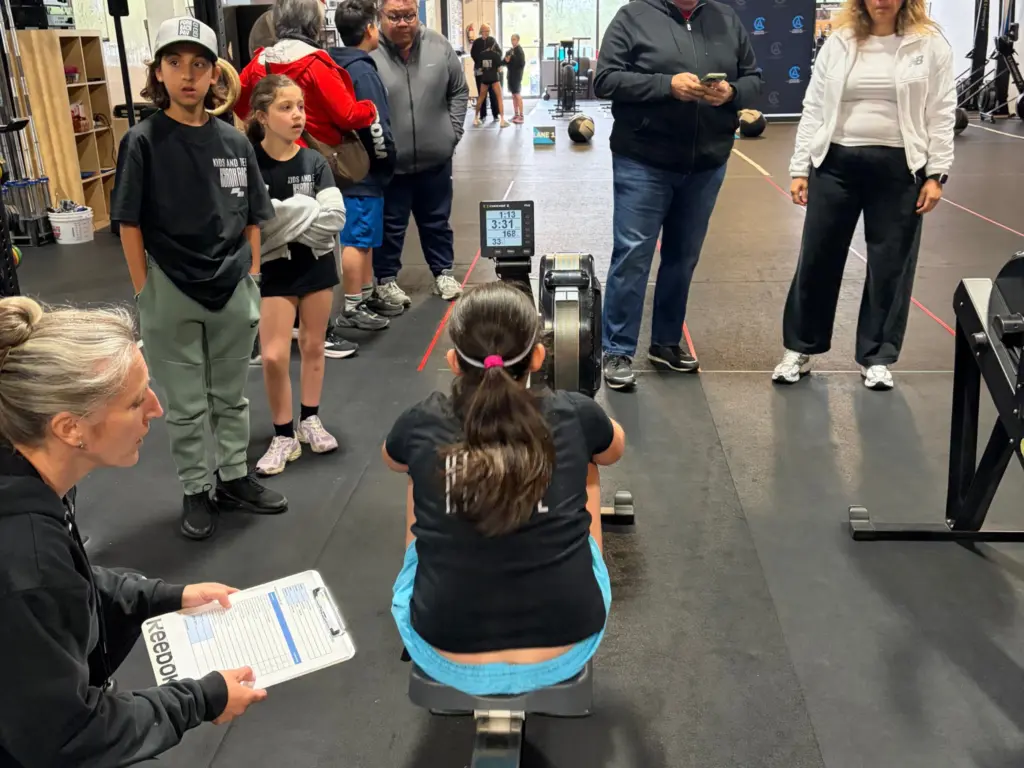
Nagging pain in a young athlete should not be pushed through. At Cristini Athletics Therapy, our physiotherapists work in the same building as the gym, so training and recovery are handled together by people who talk to each other. That’s what we mean by one trusted source of truth for your child’s health. You can book a physiotherapy visit here.
Comparison: the usual approach vs. a smarter one
| The usual approach | A smarter approach | |
|---|---|---|
| Strength training | Only in the off-season, or not at all | One to Two short sessions a week all year |
| Days off | Filled with lessons and extra conditioning | One full rest day, protected |
| Tournament weeks | Same training as always | Lighter training, sleep and nutrition first |
| Between seasons | Camps, clinics and showcases back to back | Recovery, strength, and selective events |
| When pain shows up | Push through it | Get it assessed early |
Frequently asked questions
Early specialization carries real risks, including overuse injuries and burnout. But many families are already in a year-round schedule. If that’s your situation, the best response is to manage the load well: strength training, rest, sleep and nutrition.
In a perfect world Two short sessions a week is a practical target for many young athletes, adjusted for age, experience and the sport schedule. A qualified coach should set this up.
No. Properly coached strength training is safe for young athletes and helps protect them from injury. The key word is coached: good technique, appropriate loads and sensible progression.
Start by protecting just one. Even a single day a week with nothing scheduled is a meaningful change. Then look at which extras you can drop.
Prioritize sleep and food, reduce or skip strength work, and return to the normal plan the following week.
Yes. Cristini Athletics Markham and Cristini Athletics Woodbridge both offer coaching built around fundamentals and long-term progress, with Cristini Athletics Therapy under the same roof.
The takeaway
The perfect version of youth sport, with a different sport every season and plenty of downtime, isn’t available to most families. That’s okay. A busy schedule doesn’t have to mean a broken-down athlete. Keep the strength training going, protect a day off, lean on sleep and food when the schedule gets heavy, and say no to the extras that don’t help.
Not sure where to start? Book a no-sweat intro session and talk with one of our coaches about your athlete’s schedule:
About the author: Chris Cristini has 20 years of coaching experience and owns Cristini Athletics, two integrated gym and physiotherapy clinic locations in Markham and Woodbridge.