

More and more often, a new member sits down with me and pulls out their phone. “This is what ChatGPT told me to do.” I look at it, and I’ll be straight with you: it’s usually not bad. It’s a decent general foundation. But there’s no human touch in it, and that’s the part that decides whether you actually change.
Going from nothing to something is good
Let me start with the good news. If an AI plan got you off the couch and moving, that’s a win, and I’m not here to knock it. Getting started is the hardest step, and plenty of people never take it.
The problem comes later, when you’ve followed the plan for months and wonder why nothing is changing.
What a chatbot can’t see
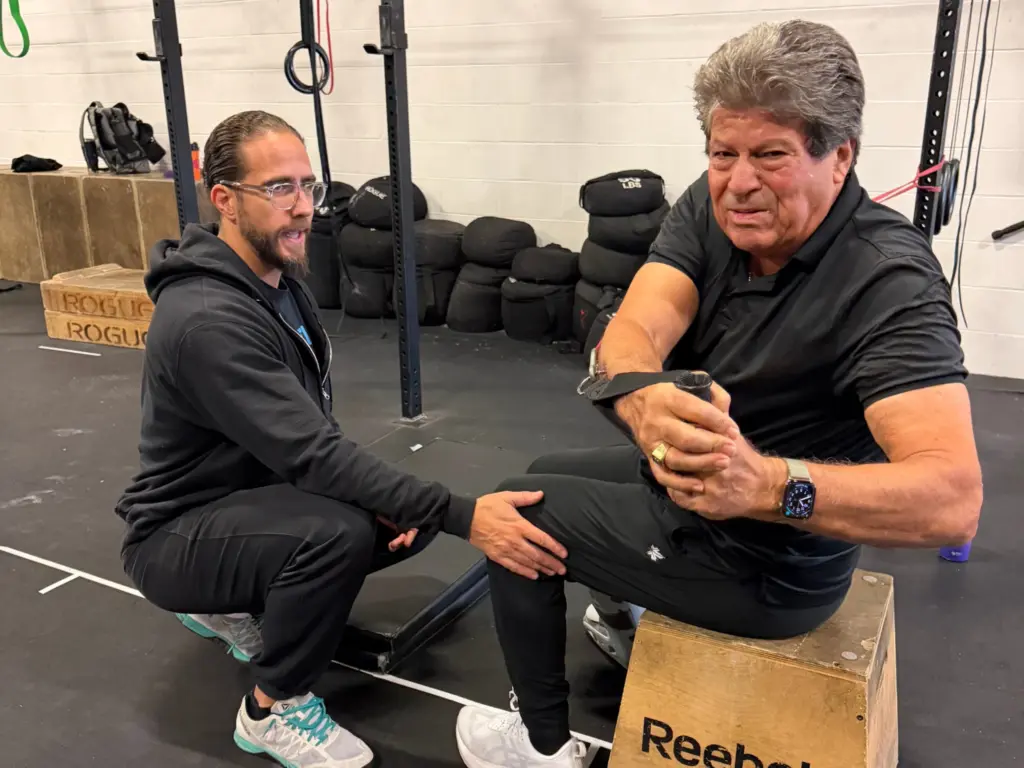
An AI doesn’t know your actual ability. It doesn’t know how you actually move. It hasn’t watched your left knee cave in on the way up from a squat, or noticed that your ankles are so stiff your heels lift. It doesn’t know what you’re capable of on a day you slept four hours, or what motivates you to show up when your calendar is jammed.
It can only work with what you type in. And most people type in “I’m 42, I want to lose weight, I have 45 minutes.”
We’re not robots
There is far more intention behind proper programming than a chatbot understands. Movement patterns. The right intensity for the right person on the right day. When to push and when to back off. How today’s session connects to what you’ll do in four weeks, and what you’ll do in four months.
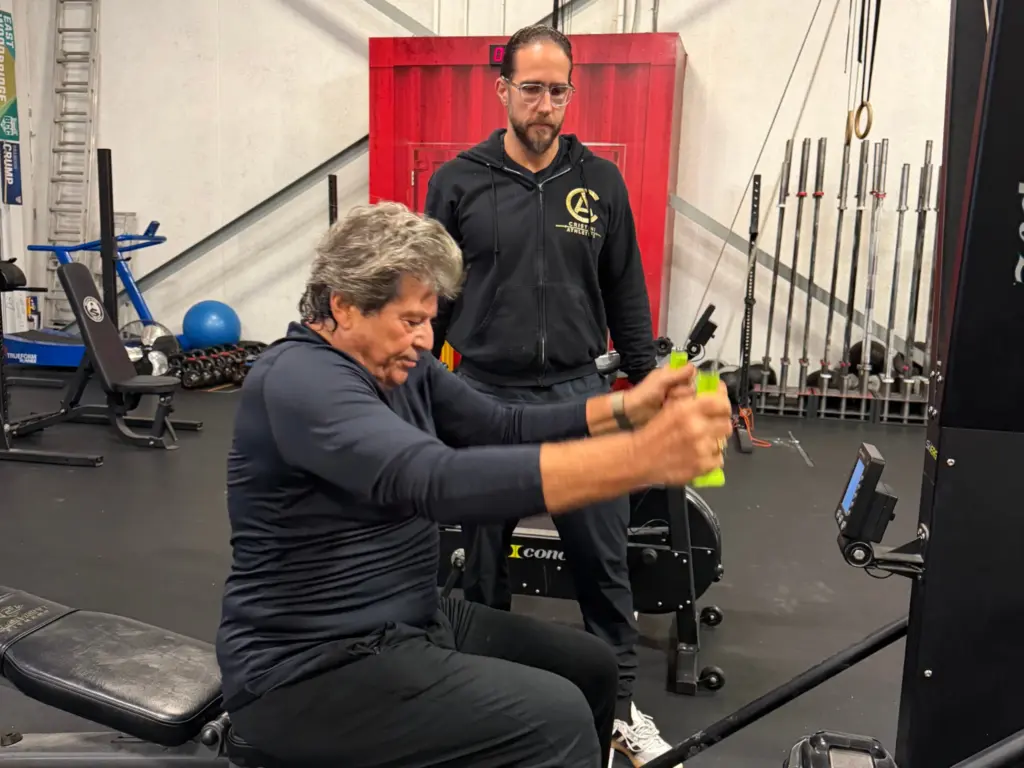
A plan on a screen can list squats. A coach decides whether you should squat today, how deep, how heavy, and what to fix first so you’re still squatting at 70.
“It was supposed to work”
Here’s what I see often. Someone follows an AI plan faithfully for three months. Same exercises, small tweaks, nobody checking form. They get a little stronger at the start, then stall, and then they decide the problem is them.
It isn’t them. They went from nothing to something, which is genuinely good, but they never had a way to know whether the something was what would make them progress.
What a coach does that a plan can’t
- Watches you move. One cue from a coach can fix a rep you’ve been doing wrong for a year.
- Scales to you. Same workout, different version for a new parent running on no sleep and for a competitive athlete.
- Tells you the truth. If your form is the issue, or you’re skipping the hard parts, you’ll hear it from someone on your side.
- Notices you. If you stop showing up, someone asks where you went.
That last one matters more than any rep scheme.
Use the tools, add the human
I’m not anti-technology. Use the app. Use the chatbot to answer a question at 10pm. But treat it as a starting point, then put a human who can see you in the room.
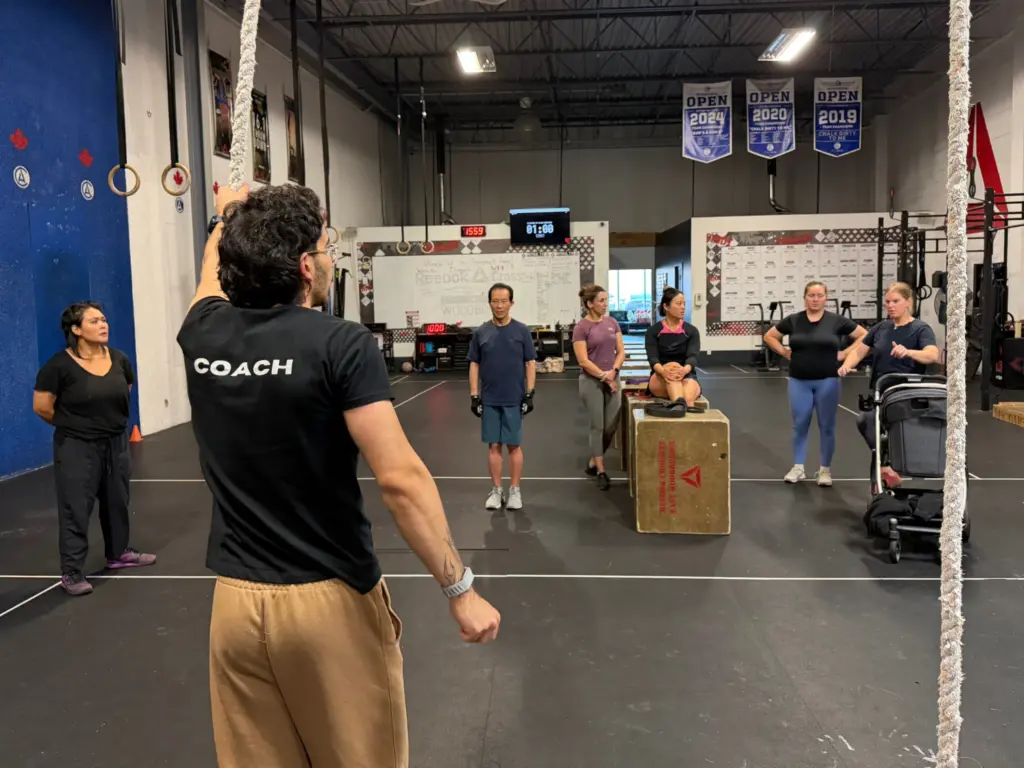
At Cristini Athletics Markham and Cristini Athletics Woodbridge, the workout is on the whiteboard, and a professional coach shows you what to do, how to do it, and how to scale it. And if something hurts, Cristini Athletics Therapy is under the same roof. One trusted source of truth, not a pile of tabs.
FAQ
Yes, as a starting point. AI can give you a general foundation, but it can’t see how you move, adjust for your stress and sleep, or notice a form problem. A coach fills those gaps.
Most plans don’t progress with you. If the movements, loads and intensity stay the same, your body adapts and results stall. A coach adjusts the plan to what your body is doing now.
Not forever, but a coach helps you find what you can’t see yourself. Many busy professionals in Markham and Vaughan get the most value from having someone watch their movement and keep the plan honest.
Let someone watch you move
If you’ve got a plan on your phone and a feeling that it’s not working, bring it in. We’ll look at it together, and we’ll look at you. Book a no-sweat intro session.
Chris Cristini has 20 years of coaching experience and owns Cristini Athletics, two integrated gym and physiotherapy clinic locations in Markham and Woodbridge.