

CrossFit asks your body to do everything: lift heavy, move fast, cycle reps under fatigue, and repeat it again tomorrow. If you’re training hard but feel stuck with tightness, nagging aches, or slow recovery, the missing link often isn’t more intensity, it’s better tissue capacity and movement efficiency.
That’s where fascia-focused training comes in.
What is fascia (and why should athletes care)?
Fascia is your body’s connective tissue network. It surrounds and connects muscles, tendons, and joints, helping your body:
- Transfer force efficiently (ground up through the body)
- Coordinate movement across multiple joints
- Absorb and redistribute load during impact and repeated reps
- Recover and adapt to training stress
In simple terms: fascia helps you move better, express power more cleanly, and stay resilient when volume and intensity climb.
The CrossFit athletes secret weapon
CrossFit performance isn’t just strength or conditioning, it’s how well you can express both with good mechanics under fatigue.
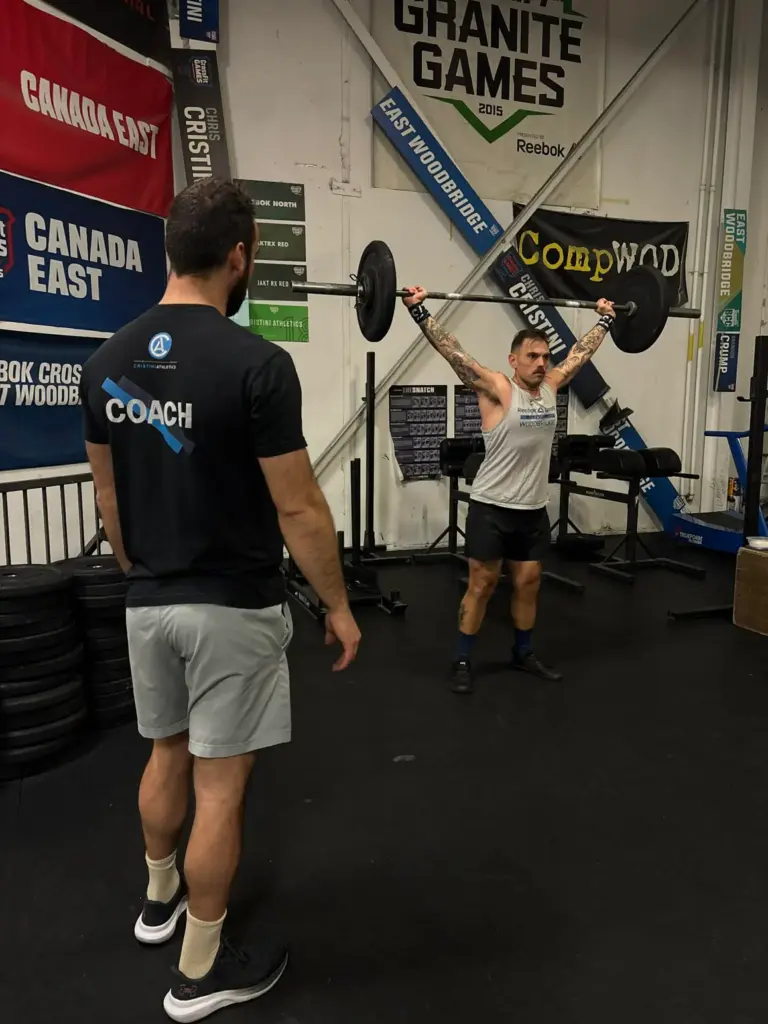
A fascia-informed approach can support:
1) Faster recovery between sessions
- Reduced tight feeling and post-WOD soreness
- Better readiness for back-to-back training days
- Improved tolerance to high-volume weeks
2) Better power output and movement efficiency
- Cleaner force transfer in lifts like deadlifts, cleans, snatches, and thrusters
- More elastic snap in jumping, sprinting, and change-of-direction work
- Smoother transitions in gymnastics and cyclical movements
3) Injury prevention and durability
- Better shock absorption and tissue resilience
- Fewer compensation patterns (where one area overworks because another can’t contribute)
- More consistent mechanics when fatigue sets in
Implementing fascia training: science meets results
Fascia training doesn’t replace strength work or conditioning, it enhances them. At Cristini Athletics, we typically integrate it through four practical components:
- Myofascial release (strategic, not endless rolling)
- Dynamic movement patterns that build elastic capacity and coordination
- Targeted mobility + control work (hips, ankles, thoracic spine, shoulders)
- Breathing strategies to improve ribcage mechanics, trunk control, and recovery
Athletes often report improved movement quality, better proprioception, and faster recovery because the goal is not just more range, but better control and force transfer.
Ready to take your training to the next level?
If you’re dealing with movement limitations, recurring tightness, or you just want to perform better without breaking down, fascia-focused training could be your next lever.
At Cristini Athletics, our coaches will assess how you move, identify where force is leaking, and integrate fascia-based strategies that complement your CrossFit training.
Contact us today to get started and let’s elevate your performance beyond the WOD.
Book a free intro and we’ll help you map out the right next step: https://www.cristiniathletics.com/get-started/